
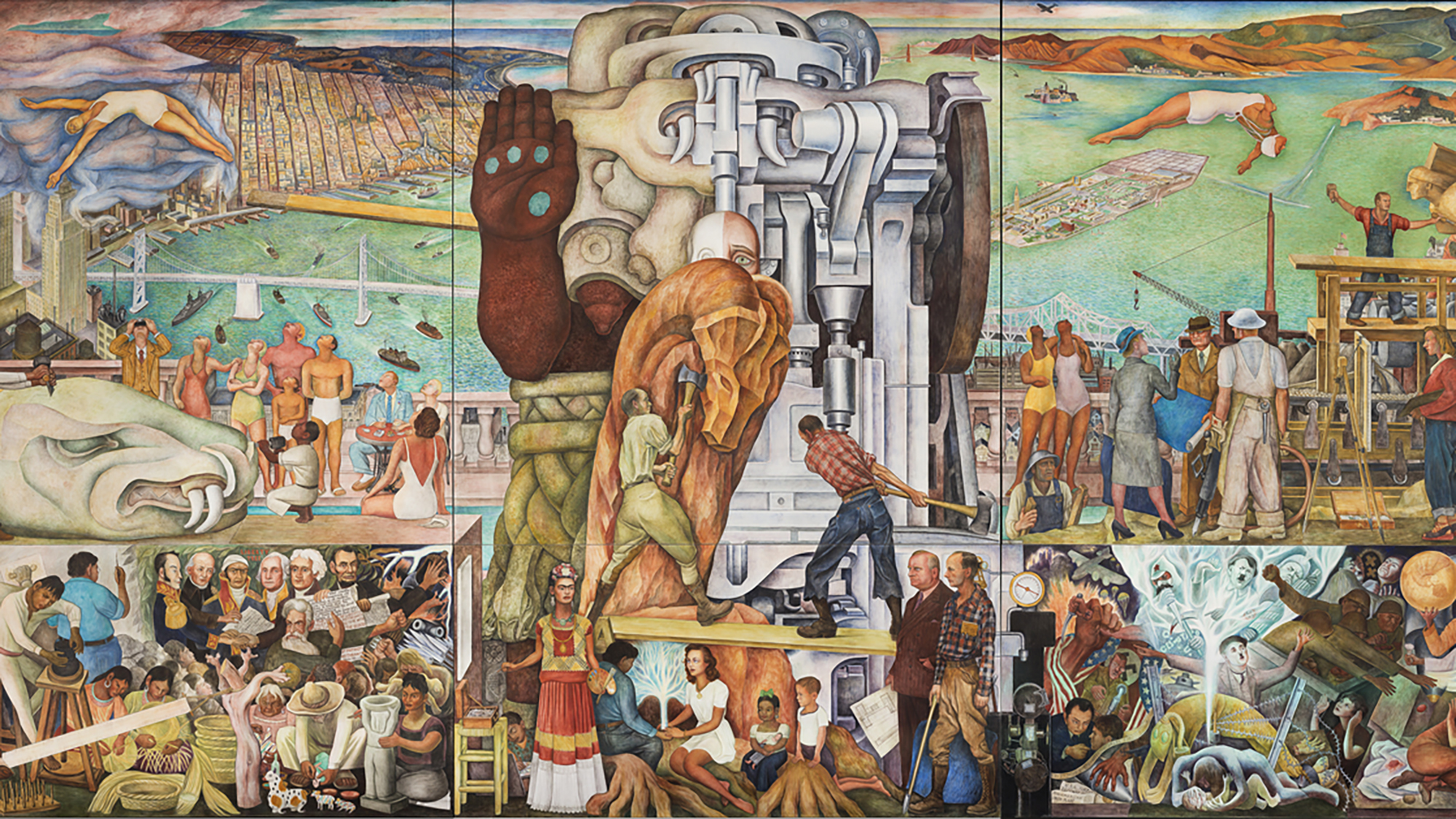
The colors! THE COLORS! It’s been {forever and a day} since I last saw this, and it is glorious. A really powerful mural. It’s in the free-to-the-public SFMoMA lobby on Howard. Go see it.
Climate Emergency: California fires (today, and for so many days)
The smoke hanging over us every day is a difficult and stressful reminder of what is happening to places we love.
Every day, the news names places I have been to, places I have hiked through, places I have photographed, and notes that these places are on fire at that very moment.
We aren’t yet at the phase where we fundamentally rethink how to live here, and how to be safer and more environmentally responsible, not just at an individual level – individuals can’t solve this alone! – but region-wide at a governmental, societal, and even corporate level. We really need to have those conversations. Soon.
Today, more than 14,690 firefighters remain on the frontlines of 13 active large wildfires. To-date more than 1.96 million acres have burned statewide.
— CAL FIRE (@CAL_FIRE) September 4, 2021
Get the latest on these incidents at: https://t.co/jBh7Rim5k6 pic.twitter.com/h6lR2vaZ0P
Book: Zaha Hadid by Philip Jodidio
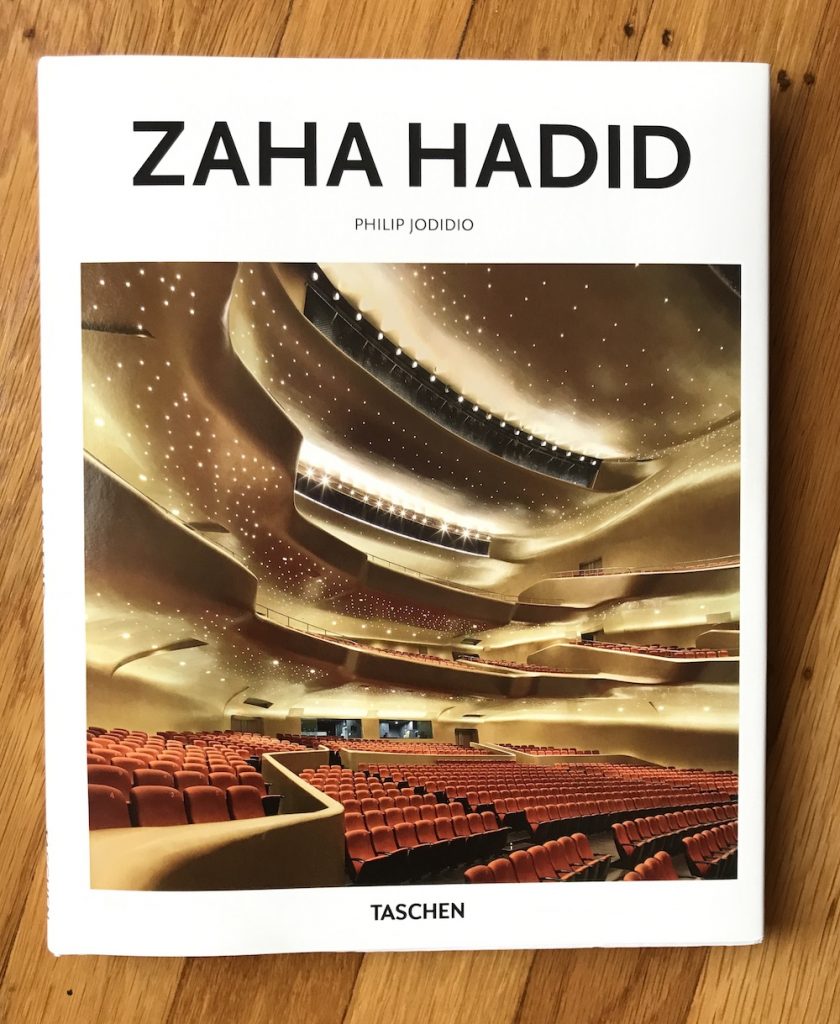
Zaha Hadid
by Philip Jodidio
published by Taschen, Köln
2019
Before reviewing this book, I wish to disclose how I feel about deconstructivism, even though Hadid’s work is NOT the old meaning of THAT fad. I trained as an architect and worked in architecture in the late 80s and early 90s. In school, I had a few oppressively modernist instructors (as in the 1950s concept of modern) get very, very excited about abstract deconstructivist drawings of spaces which could not be built, and which had no human use. While they obsessed over floating red triangles, they still insisted that an ideal building was a Palladian villa. I’m not kidding. They couldn’t see where the movement was going. Also, the deconstructivist works they liked best could not be built on earth because of gravity. They completely missed the rebellion against simple forms that these fetishized, sharp drawings offered. Their enthusiasm for drawings with no application on earth put me off all such work for a long time. In the meantime, Hadid’s real world, mature work displays great characteristics which were implied by her early rebellion against simplistic geometries, which led me to this book.
This book is a profile of Zaha Hadid’s architectural practice, and the work of the global firm she founded, which continues to produce remarkable buildings consistent with her approach beyond her death. The Taschen Basic Art series is a collection of artist profile teasers, which get you started in your studies without committing you to a vast, oversized portfolio the size of your coffee table. It takes a light, greatest-hits touch, which was just right for me to familiarize myself with her recent work and help me overcome my misgivings around the early conceptual drawings I used to associate her with.
The essay by Jodidio is long, but it helped me clarify elements of her designs I like. I was pleased to read that she always worked with engineers up front, not at as an afterthought, which explains her innovative designs for walkways (such as the famous floating ramps and stairwells of the National Museum in Rome, and so many other cores of her buildings), which define many of her interiors for me. She incorporated and used below-grade spaces as essential spaces within her designs more visibly than many of her contemporaries, and this allowed for different circulation patterns, which also feel innovative. Her use of organic, fluid-appearing forms carries through her designs in a way I feel is superior to some of the others working on similar projects. Many of her theoretical drawings and early designs also anticipated computer-supported fabrication, so it sometimes feels like the technology caught up with her ideas.
The selection of projects is excellent, and the photography is well done, especially with respect to night scenes and interior lighting. (Hooray for architectural photography!)
I’m not entirely sold on all of the interior spaces. There are walls that melt down into the floor in a way that will tempt skateboarders, but foil pedestrians, and while those feel consistent with the intentions for the overall building forms, they sometimes look… leftover? I’ve been in her building in Seoul, and loved her plazas and bridges, but the interior spaces I entered were more cavernous than comfortable.
This book is an attractive and affordable introduction to the built work of an innovative architect whose portfolio feels both contemporary and futuristic.
For those of you who drink: the introductory essay creates an opportunity for a drinking game. Take a shot each time you encounter the words “seamless” or “chthonic.” You are also allowed to have an outburst each time a comparison to modernism is made.
Internet: Updates to my Fine Art Photography Blog
I don’t update my photography site very often: galleries and art shows don’t want art that has been shared previously! (Darn it!) But I shared three posts there this month, and plan to post more in coming weeks.
In the order they went up:
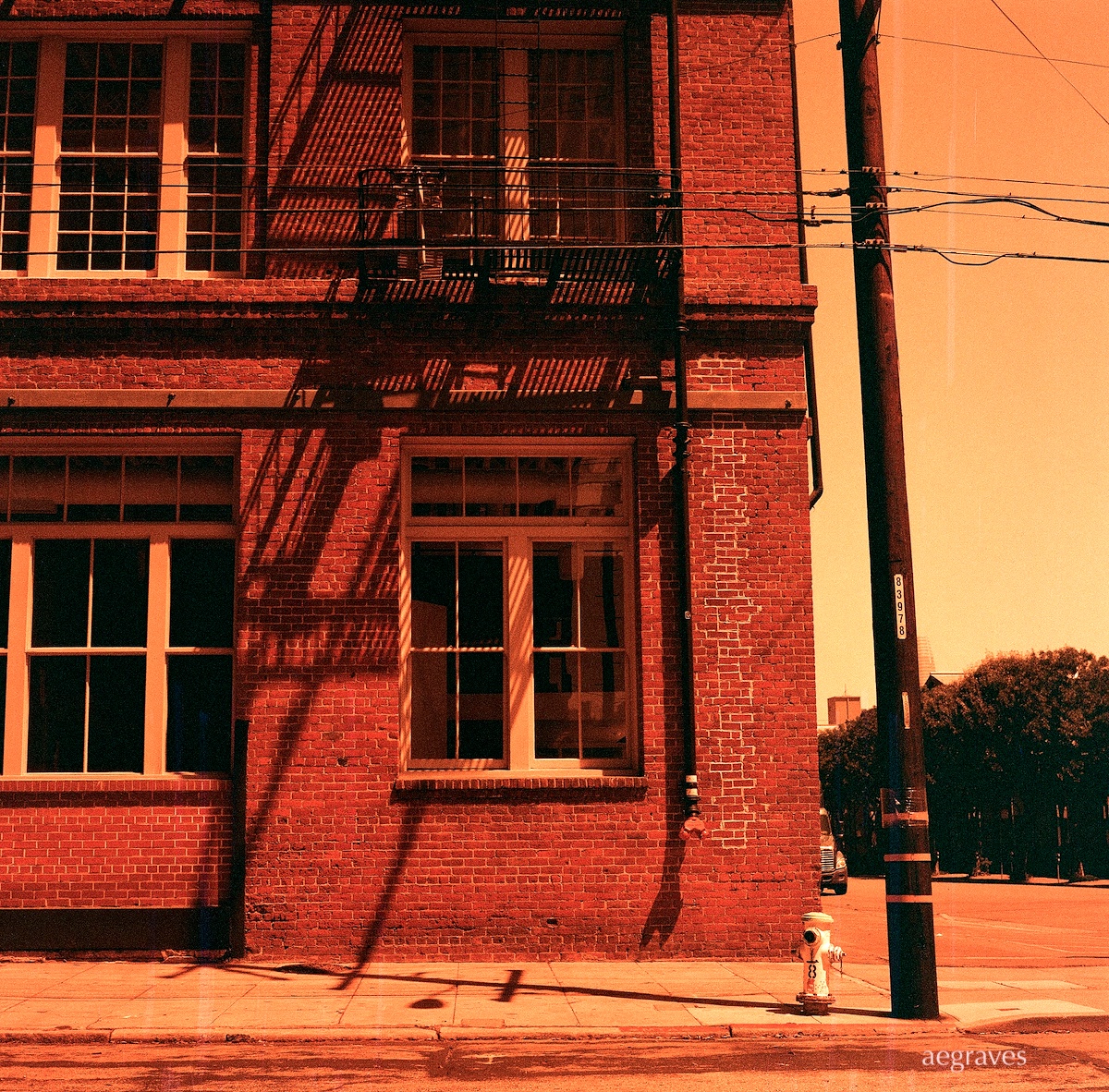
Medium Format Brick Wall Portrait in Red – Words About Images
As the most pandemic restrictions lifted and I could leave my neighborhood in spring, I committed to getting out of the house WITH CAMERAS.
This post is about an image that is completely typical for me.
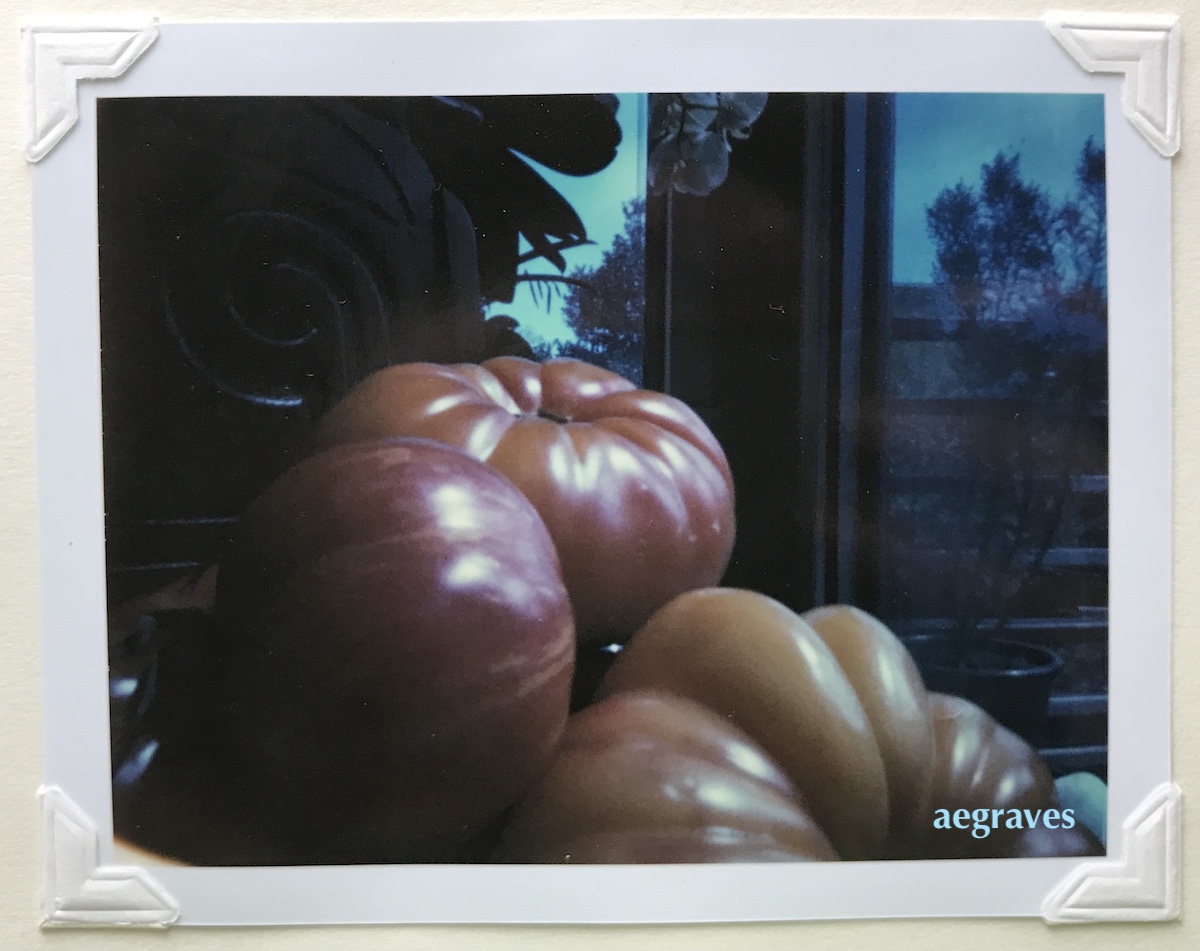
Pinhole Photography (with fancy technology) – Words About Images
Pinhole photography has a long and honorable tradition as a school project, as something photographers do for fun, and as a way to linger by creating long exposures in places where you want to hang out. There have been impressive works made with pinholes, but people usually choose it for the fun an…
I tried pinhole photography in one of the least DIY methods possible.
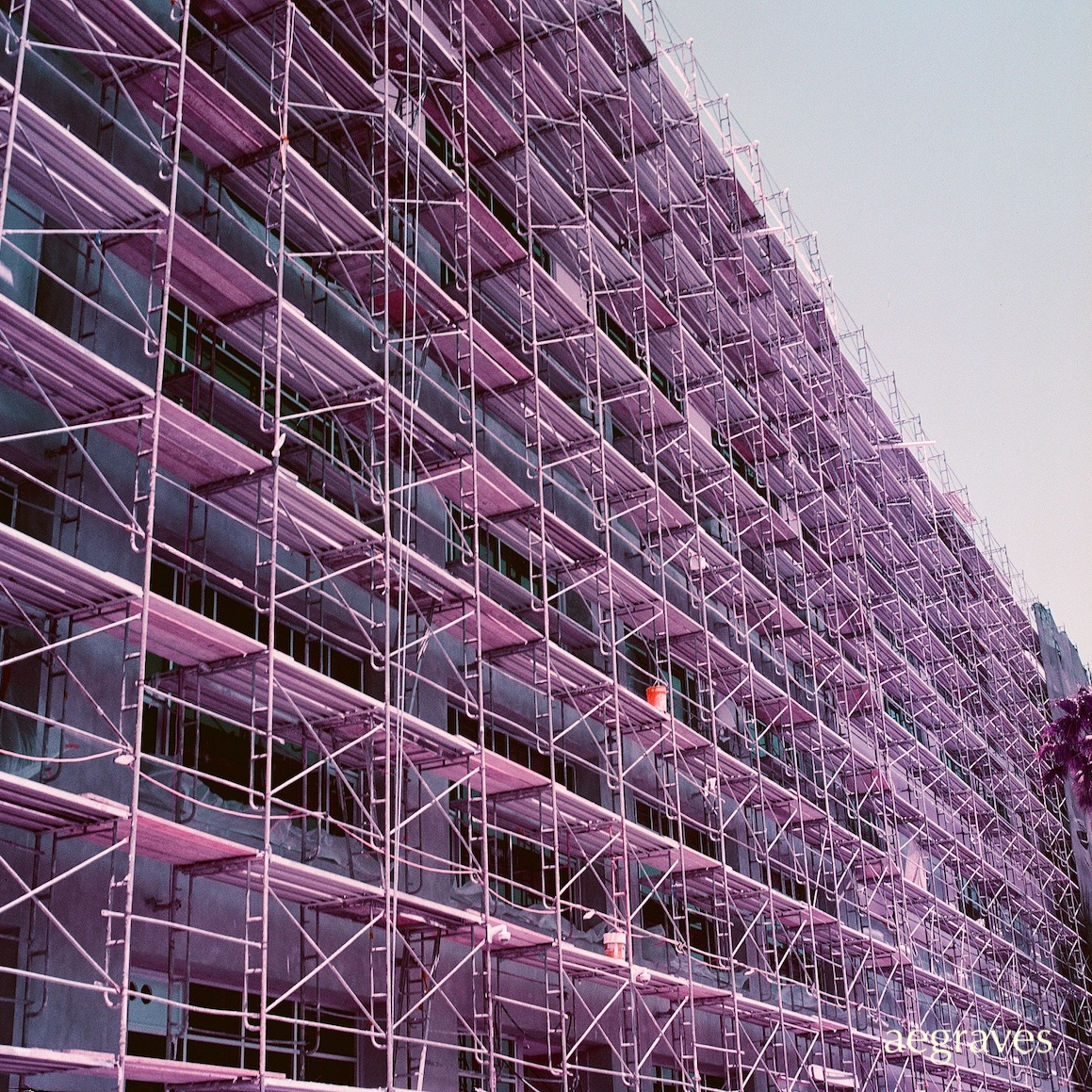
Analog and Digital (Not Versus) – Words About Images
(Image: medium format film shot of China Basin scaffolds, taken on Lomography Purple.)
This post explains why I use both film and digital technologies, for practical purposes and special effects!
It seems obvious to ME – the right tool for the right job! – but people who don’t make images require an explanation whenever I use film, regardless of context. (I was last asked by a non-photographer to explain my choice again this week, so this post is likely evergreen.)
Life: Time for my own projects
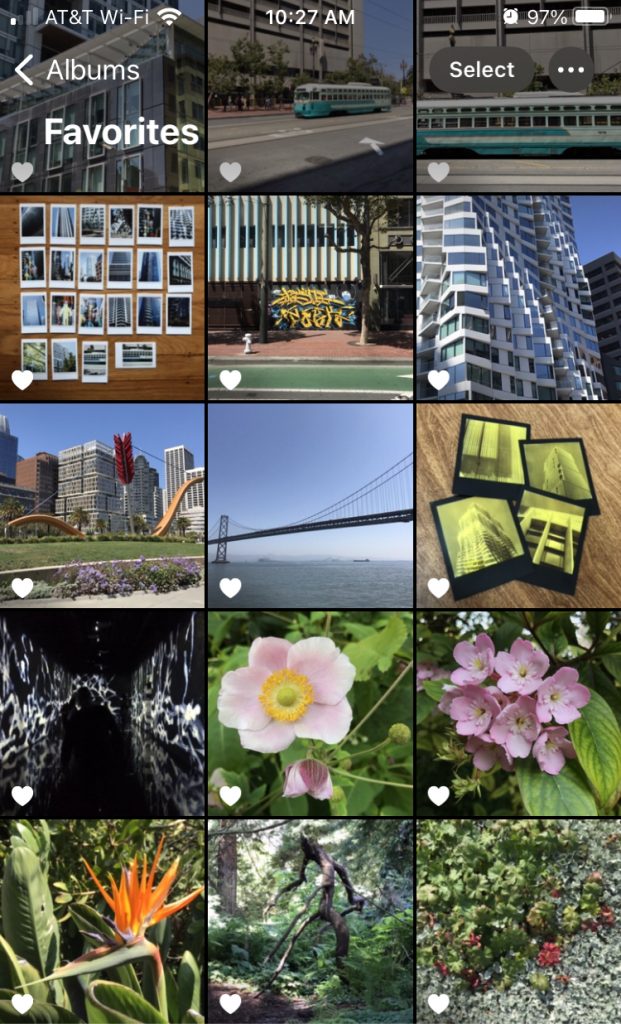
I… have… time… of my own! Right now!!!
After ten months of maintaining business continuity and transferring of all of my team’s and my own work to colleagues at a new corporate parent, I have a sense of accomplishment and relief. I left ‘things’ in good hands and departed on good terms, and now I can relax for a while!
Medical, dental, and administrative appointments took up my first days off, and more of those appointments are coming. I caught up on chores, those things I felt I must do, and did some cleaning. I took some photos, but it always felt like I had to go back to work when I completed a roll!
And then, on Wednesday of this past week, it felt REAL.
This time is really mine. Which feels rare and precious and wonderful and amazing.
I wake up early to take film out of the refrigerator to use for the days when the weather and smoke forecasts are favorable. I go out on long walks, looking at the lighting in various locations at different times of day, and choosing how I want to photograph certain buildings. I make excessively complex plans for setting up photo albums page templates for my Instax Mini prints. I fell into a rabbit hole about graffiti art by researching the Montana acrylic markers I use, which are inexplicably made in Heidelberg (!?!?!) but named after a very western state to celebrate the urban graffiti of New York City(!?!). I am now aware of the few SF Historic Districts we have; I looked up architects of buildings I like to photograph; I am reading books; I caught up on my correspondence in both English and German (!); I’ve even seen my friends!
It’s so exciting to have a life beyond my job.
I am lucky to do amazing work at amazing companies. My work offers exciting challenges and a chance to collaborate on programs that can improve human health, and is stimulating in many ways. Sometimes, they even let me listen to scientists! (Sometimes, I even understand what the scientists say! 😀 )
Yet, THIS intense self-study and self-guided time is also really NICE. Restorative. Stimulating. I can make bigger plans. I can follow my curiosity to wherever it leads me.
I’ve been having symbolic dreams at night about this. Dreams of trying to go somewhere new but being held back by other people’s issues have given way to dreams of arriving at my destination(s), and enjoying great views from a clean, pleasant location. (The cities in my dreams are GORGEOUS at night, and reflect spectacularly on nearby water!)
And then I wake up and fanatically research ink or film or glass paint or authors or book publishers or fonts while drinking French press coffee or homemade chai. (Hahahaha!)
I remain concerned about humans, and the consistently poor decision-making I’ve been witnessing. I’m going to try to vent some of this in harsh fiction, when I’m not fanatically doing something else… Otherwise, I’m hoping all this exploration will result in some good posts here, even as I wonder if this is really the best place to share what I’ve learned about spray paint nozzles. (There are SO MANY, and… oh, pardon me. Ahem.)
So books, coffee, AND MORE. 😉
Words: 800 Days of Duolingo
The Duolingo app is still a regular habit of mine! I’ve been using it in different ways for different languages, and with even more practice behind me, my favorable opinions have grown even stronger.

During the course of my studies, Duolingo has been adding lessons and improving exercises. I appreciate and like the improvements, which I feel have increased my understanding of topics like verb tenses.
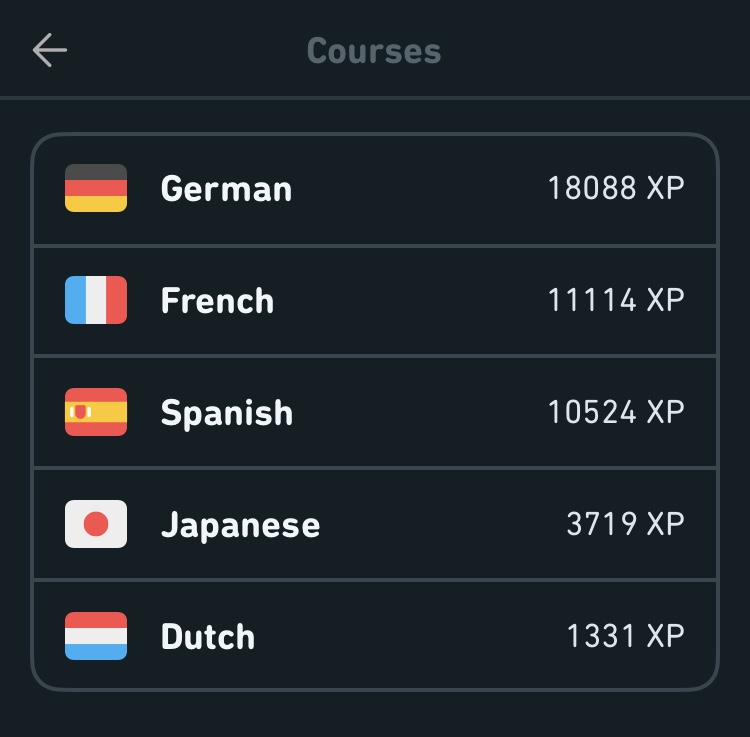
German is the language I still use the most, and it is the one I have completed all of level 1 for. I have pen pals who don’t speak English, and this has increased my need to be able to write skillfully and expand my vocabulary. Duolingo introduces practical topics that are more current than the lessons I learned so long ago. (I remember the word for reel-to-reel tape player, because I had some old books – I’m trying to move AWAY from that!) I’m moving through all the lessons in a linear fashion, and plan to complete all of level 2 this year.
Since I first studied German in the 1980s, I can think entirely in German for periods of time, so when I am too tired to study another language, I return to German.
French is my runner up, and a language I always THINK I should speak, though I mostly have reading experience. (I’ve used French transactionally in France, with success but no depth. I’m much better with written French than spoken.) The best part of the app for me with French are the listening exercises: there were sounds that I couldn’t distinguish before, that I can now! My pronunciations remain dodgy, and the app is trying to help.
Spanish is a language I have heard all my life, since I grew up in San Francisco’s Mission District, and would need to use my height to get objects off of high shelves for other people’s abuelas. Talking to abuelas only taught me NOUNS, however, so I’m using the app primarily to learn verbs and form complete sentences!
Spanish is the course where I started writing out notes on verb conjugations, and it turns out I REALLY need those for reference. My note-taking has helped improve my answers, since I recall things better when I have written them out. I also use independent references for verb conjugations. Duolingo helped me finally think a few thoughts spontaneously in Spanish, which is new and exciting.
Japanese is a recurring interest, and a language I studied independently for a brief time in the early 90s. (I learned hiragana and katakana, and tourist phrases; I have visited Japan twice on multi-week trips, and was able to translate signs for other foreigners both times.) Japanese for English speakers is a relatively new Duolingo course that I had been eagerly awaiting, and I’m really impressed by it.
This language program is INTENSE, since there are new characters to learn in nearly every lesson. It helps to be familiar with hiragana before beginning, but the program covers it, and then replaces some words you’ve learned in hiragana with their kanji equivalent, which is how students there learn kanji, I believe.
I’m finding weak spots in my katakana, and am learning that note taking for the new kanji characters is ESSENTIAL. I was clever enough to subtitle the kanji with hiragana early on, but making notes in English is a fair enough habit.
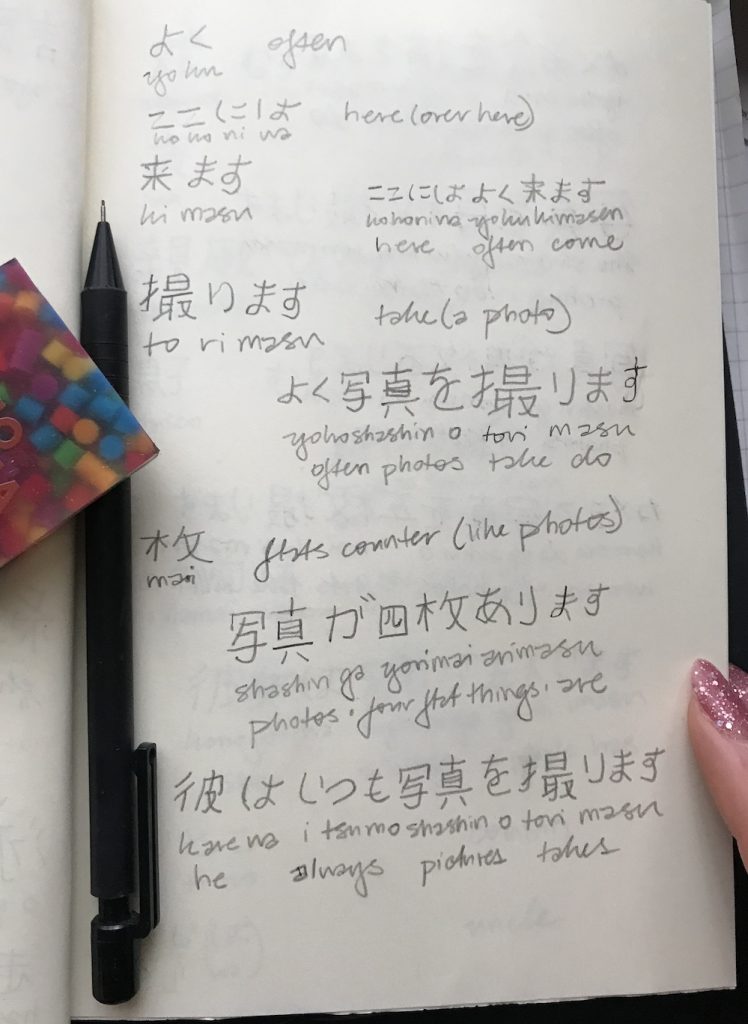
I’m learning the Japanese counting method, where the number is modified by the shape of thing being counted, and it is a tribute to Duolingo that they have introduced this gently enough that I did NOT run away screaming.
I am not super confident that I can recall some of these lessons where multiple new kanji were added, and so I may use the course differently from how I use it for other languages: instead of completing level 1 for all lessons, I may keep stepping up my levels in the early lessons until I really feel comfortable.
SO: Duolingo is a useful tool. You can set your own pace, and use it as a standalone study method (especially if you are already familiar with the languge) or as a supplement to other tools. If games and competition motivate you, you can get competitive in your ‘league’ against other students working at a similar pace. The courses are regularly improved based on the data they see across students. It has options to skip ahead and test out of levels that you are acing. I’m happy to see the addition of Japanese, and the care that went into designing the lessons.
I still recommend it! 🙂
Climate Emergency: Still an Emergency
I don’t WANT to get used to yellow sunlight, and wildfire smoke forecasts, and masks with 2.5PM filters in them, but…
Today, 15,958 firefighters remain on the frontlines of 15 active large wildfires that have burned more than 1.7 million acres. Get the latest on these incidents at: https://t.co/jBh7Rim5k6 pic.twitter.com/tPWlzl5lk2
— CAL FIRE (@CAL_FIRE) August 29, 2021
Language: German Conjugator
I write in German regularly, but not fluently. What I mean is, my conversational German is okay (I can talk about my life and the weather), my transactional German is okay (I can buy shoes and order food), but my new pen pals keep raising topics I’ve never discussed in German, and so I’m learning new words. Which is GREAT! But… I don’t know how to conjugate the new verbs.
Google Translate (translate.google.com) is nearly magical in its application, and I rely on it while traveling. The image to text instant translations are AMAZING! And the translations are pretty smart. I think I’ve mentioned before that it misses context and nuance, which makes some sense: when I had large Swiss bills and smaller denominations, it offered transformation in place of change, because the nuance is a little different in German: I needed small money. But I knew enough German not to ask for transformation, so it was FINE.
Anyway, Google Translate is my go-to for trying to say new things. However, for all of its excellence, switches between conversational past (I had eaten) and simple past (I ate) in a way that distracts me, and which I don’t seem to influence by my English wording. I want to be more consistent, and this tool, which is called Reverso Conjugator, can help me!

German verb Conjugation: modal verbs, present, future, conjugation models | Reverso Conjugator
German conjugation: conjugate a German verb with Reverso Conjugator, see German conjugation models, conjugated forms in future, participle, present, indicative.
We used conversational past in school, so simple past is kind of exciting – close to how I speak in English, but also unfamiliar in a few ways. So, I’m using it to learn, and it’s been great so far! I recommend it!
Pandemic Life: Humans are Strange
The biggest news today is that the Food and Drug Administration officially FULLY approved the Pfizer COVID-19 vaccine for adult use against COVID, which is a big deal. It doesn’t change our access to it here in the U.S., it just shows people who claimed their reluctance was based on the vaccine’s lack of full approval that their concerns have been alleviated. If that was their actual concern.
Meanwhile, the same FDA had to say this.
You are not a horse. You are not a cow. Seriously, y'all. Stop it. https://t.co/TWb75xYEY4
— U.S. FDA (@US_FDA) August 21, 2021
Somehow, American adults who don’t trust the vaccine specifically to protect humans against COVID do trust a livestock deworming medication which is neither for humans nor for COVID.
I do not understand this.
Old person story: Kids used to try to persuade their parents to let them do something because all of their friends were doing it, and parents used to reply by asking if they would jump off a bridge if their friends did it, which was supposed to make a point about blind conformity… but… now I suspect some of those kids could counter with, “Like the time you took horse de-worming medication to treat an unrelated illness because of something you read on Facebook? “ Which would make their parents go quiet.
The World Health Organization has been compiling the wacky things people think, to correct their strange confusion. Their myth-busting page is here:

COVID-19 Mythbusters – World Health Organization
Highlighting some of the misinformation circulating on COVID-19
My favorite, because it is about tasty food, is:

Climate Emergency Life: Oddly Tinted Sunlight Persists
When I look directly at the sun (which I should not be able to do), the sun and the light that reaches us here at ground/sea level still has a strangely orange tint. Considering the vastness of the fires in my region, this shouldn’t be a surprise.
Today, over 13,200 firefighters remain on the frontlines of 13 active large wildfires that have burned over 1.54 million acres. Get the latest on these incidents at: https://t.co/jBh7Rim5k6 pic.twitter.com/kiKhBgNxcz
— CAL FIRE (@CAL_FIRE) August 22, 2021
It’s not just my region, of course. There are fires all up the western coast of North America, and serious fires in Canada that have also destroyed entire towns. Heck, it isn’t even about North America. This month, we have seen raging fires in Turkey, raging fires in Greece, even raging fires in SIBERIA, in North Africa, in… well, you get it.
Strangely, a colleague said a friend of hers was leaving California to avoid the wildfires. I made a face, because… leaving one state to escape the global climate emergency won’t work. (I’m not listing all the locations that have experienced floods in the news over the past month, but it is just as long a list, and it is happening for all the same reasons…) I wonder how long it will take her friend to figure that out…