Having taken so many precautions for the pandemic for so long, part of my brain has been eager to visit another country ever since my second vaccine dose kicked in, but before Delta made its special talents known. While in real life I have no plans to travel outside of California this year, my brain is still wandering.
Out of curiosity to see what the options (which I will not be availing myself of soon) are, I visited the CDC’s website.
COVID-19 and Your Health
Symptoms, testing, what to do if sick, daily activities, and more.
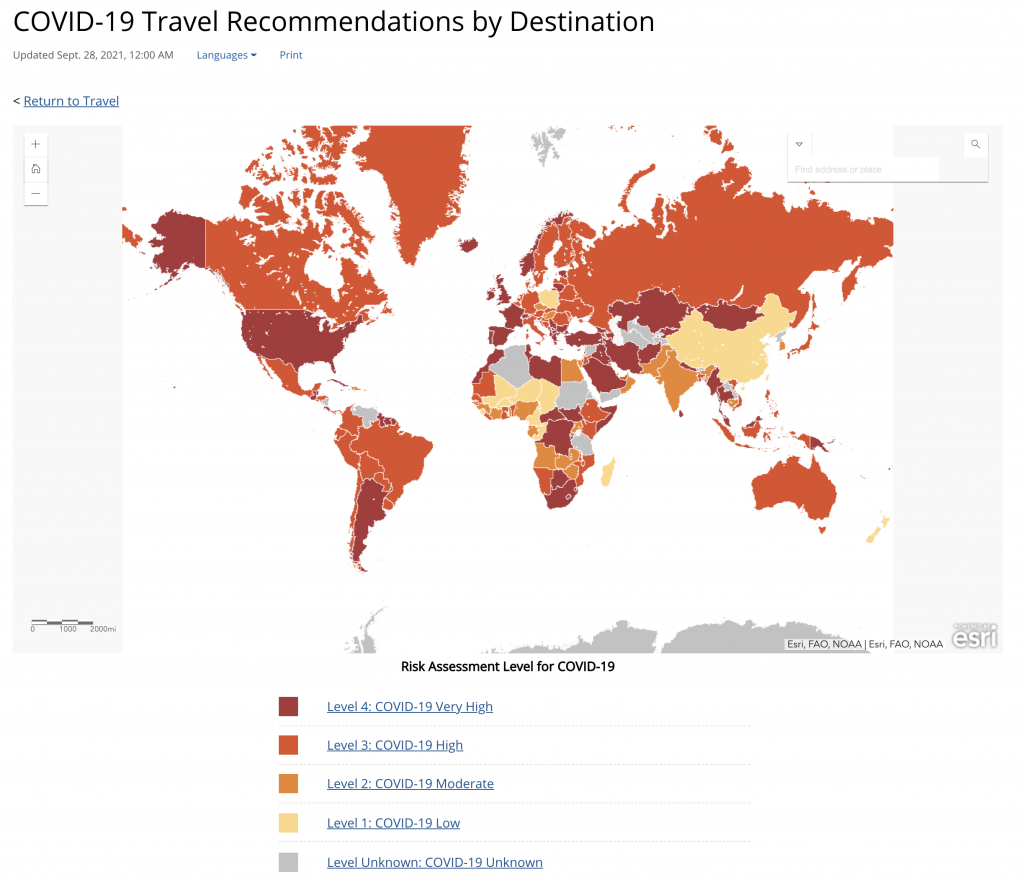
So you’ll see what I’m looking at, I’ll paste in the map here:
A clear and useful illustration, but “not a pretty picture” in the metaphorical sense
Sure, we are a country with abundant vaccines, but we still manage to be in the worst possible tier, because: some Americans have… issues.
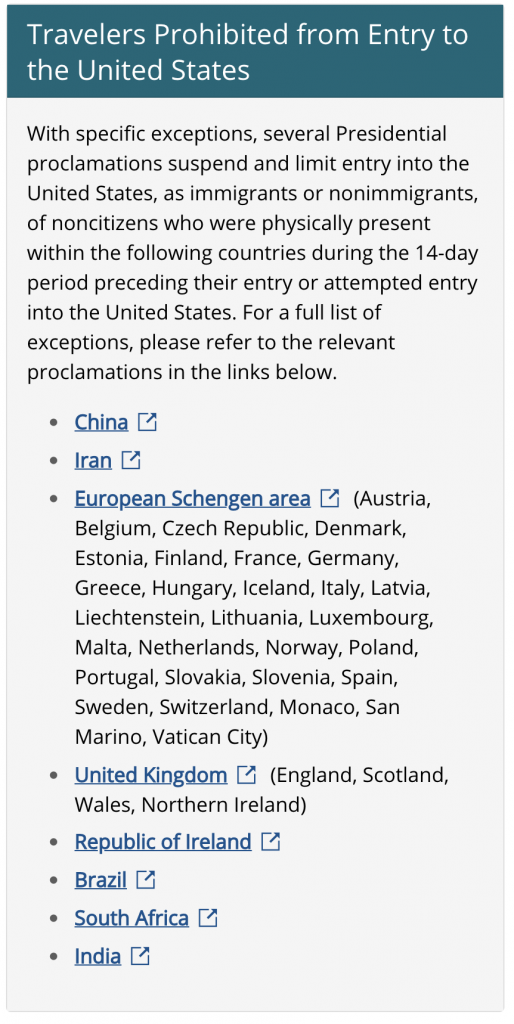
Even though we are in the worst tier, we remain fussy about who can visit us. So, contrary to the hopes a friend in Sweden recently expressed, or the plans of a new Irish pen friend to visit his sister here, or the absurdly optimistic entreaties of British Airways in their advertising communications to me about booking trips to Europe, here is our current list of banned nations:
The ENTIRE SCHENGEN ZONE is on the list!! This hits me because I used to have a job that required frequent travel between a team here (in California) and one spread between the UK and the Schengen area, and… that job would not be possible in pandemic times. I was lucky to have had such a unique job, and appreciate it all the more now that it is such an artifact of the Before Times.
I am all the more grateful in retrospect for the travel opportunities I had in the past.
I recently tried to open some archived files, and… couldn’t. Some are old novellas I wrote for National Novel Writing Month, and the successors (directly or indirectly)( to the word processing software I used (AppleWorks, which used a ClarisWorks file format) has evolved to no longer recognize those files. Others files from same software’s spreadsheet feature, contained indexes of hundreds of rolls of film in my art archive, an indexing those was effort that I am loathe to repeat. Those CWK files also seemed to be locked to me forever.
In the past, online people recommended the same in/direct successor software that had already failed me. Despite this, I searched afresh, and read a helpful comment on someone’s similar plea for help that LibreOffice (the successor to OpenOffice) could likely open old CWK files.
LibreOffice did it! I was able to open both the novellas and spreadsheets immediately, and save them as modern, non-proprietary file types.
I donated to the Document Foundation immediately, in support of their goal to help creators own their own content. I also recommend LibreOffice strongly for this purpose. This is a great tool.
Home | LibreOffice – Free Office Suite – Based on OpenOffice – Compatible with Microsoft
Free office suite – the evolution of OpenOffice. Compatible with Microsoft .doc, .docx, .xls, .xlsx, .ppt, .pptx. Updated regularly, community powered.
Note: if you’ve got old files that you have been backing up but not migrating to newer software, and their content is important to you, consider translating/converting it into contemporary, non-proprietary software formats and/or other “archival” formats appropriate to their content type.
If you really treasure something, you may also consider making hardcopies of it, if that is practical. If you don’t have access to a home printer, want it printed quickly, or want special binding, you can have your files printed in any number of sizes and formats (bound, loose leaf, printed as books) at a standard office support and copying services. Some of my writing from the 1990s was not portable to other computer platforms or rival software packages, and so the only form I have that work in now is hardcopy. Paper works!
The paintings read well at stamp size (and the stamps are generously sized, which I appreciate!), and are even better at oversized postcard size. The oversized postcards are printed on surprisingly sturdy card stock – I feel confident they’ll travel well, even to my international pen friends. The colors are great – rich and deep – with a matte finish.
Sanchez’s work is a great choice for postal products, and I’m sure the recipients of my mail will enjoy and appreciate these cards and stamps.
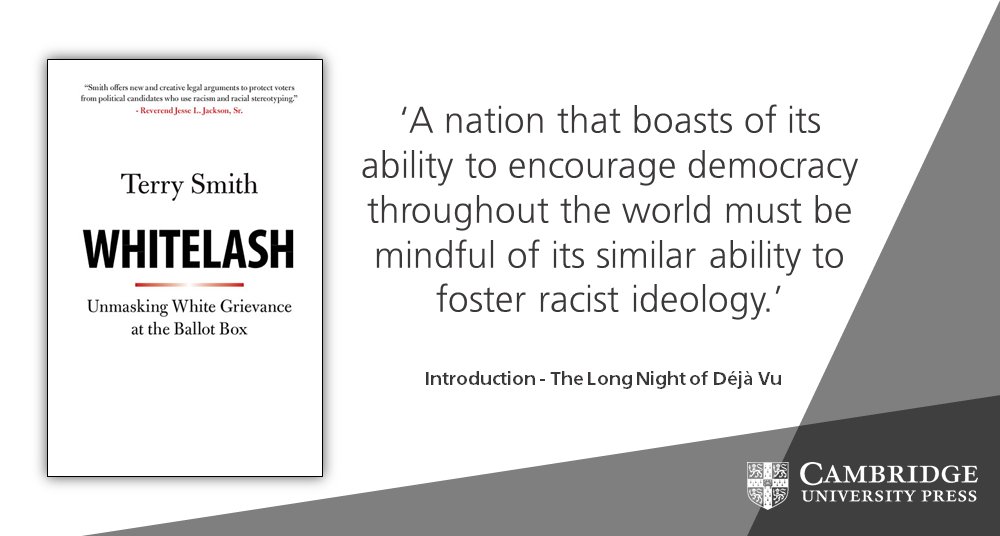
This is a very thoughtful book that I began zealously recommending to others as soon as I was a few chapters in. Written by a law professor, this text analyzes the actions of the Trump Administration and motivations of its supporters, and asks: is the overt racism displayed by the administration and its primarily white supporters legal, and can it be addressed within existing legal frameworks?
Aside from me: For anyone who wasn’t in the US or following news in late 2016, the election of a failed businessman over an experienced and successful female secretary of state is best understood as a reaction by conservative white voters against the party and policies of the twice-elected African American president. While the US has a mythology of cultural openness and racial inclusion, this mythology is usually limited to justifying structures of white dominance with minor multi-cultural visibility. It appears from interviews and studies (included many cited in the footnotes of Smith’s book) that a black president made many whites feel that their unearned dominance was ending, and so they chose a leader with animus against a range of non-white ethnic groups with hopes to re-entrench whiteness as the center of political power and as the only true American identity.
Mr. Smith’s definition of a white backlash, condensed to Whitelash, is very clear:
Whitelash is the reaction of many white Americans when they believe that strides toward racial equality have run amuck, to the point of threatening their own material well-being, even as they remain far better-off economically than people of color…. This fear manifests itself through individual and collective efforts to retain the benefits of a structure of racial inequality, efforts that erroneously cast equality for people of color as discrimination against whites. Thus, the default position—the social baseline—from which too many whites define the normalcy of race relations is racial inequality.
from Whitelash Chapter 1, Electing Trump and Breaching Norms
With an extensive background in civil rights law and discrimination cases, Mr. Smith finds that in most circumstances, the stated intentions of the administration, which displayed clear animus against specific groups, would be legally actionable. From housing rights to employment to labor law and beyond, an announced intention to “ban Muslims” would put DT on the wrong side of the law. The racial animus that animates his followers is harder to legally address, but Smith ultimately proposes common sense solutions to cancel out the local manipulations of racists, which currently roll up to have adverse national impacts for all of us.
Smith’s analyses are methodical and well supported with citations to source materials. As a legal professional, it is what I would expect in my profession and in legal education more than in the popular, general-audience press. The writing is clear, and the explanations of the law are superb, and there are great citations!! (The Apple ebook version has each footnote linked in a way that makes it easy to read them and jump back to where you left off reading. I also appreciate the many colors of highlighting in the Books app, which I utilized extensively. I’m sure other eBook software has similarly beneficial features, but this is the first time I really utilized them, and it made a great impression.)
Thanks to Smith’s thorough research, the book goes beyond law and features many amazing quotes and references to other worthwhile books that delve into some of the topics covered. For example, while so many of us can’t understand how voters could sabotage material improvements for all of us, or even vote against policies that would benefit them directly, content Smith cites suggest that people’s idea of themselves as conservatives wins out emotionally over their own specific material situation.
“ In 2004, Emory University political psychologist Drew Westen conducted neuroimaging of the brains of partisan men presented with evidence that both Democratic presidential candidate Senator John Kerry and Republican incumbent George W. Bush had made contradictory statements. Democrats were more critical of Bush’s statements, and Republicans were more critical of Kerry’s. The neuroimaging revealed that the portion of the brain associated with reasoning—the dorsolateral prefrontal cortex—played no role in eliciting the partisans’ responses to the candidates’ statements. Instead, the emotion circuits of the brain lit up when the subjects responded.”
(emphasis mine)
This helps me understand why people would vote against getting life-saving healthcare, for example – their political self-image has no room for such things, and their emotional fears of not being first in line, or of anything good happening for people who look different from themselves, kills such support outright. (You can see this in discussions of the national healthcare program: people whose lives were saved by “Obamacare” have spoken out to say they had opposed the idea on principle, while others said they opposed “Obamacare” but supported the “ACA,” – even though they are the same thing. One label offended their political identity.)
It can be painful to relive some of the terrible, racist actions, statements, and policies that were made during the time period covered, but it is also useful to see these actions against non-white and non-Republican groups as part of a long term pattern and strategy (with source citations!), rather than in the outrage-of-the-day coverage that we had at the time.
In summary: this is the best book I’ve read on the topic of political racism and its impacts in the United States. With a wealth of citations, clear writing, book recommendations on related topics, and a thoughtful and logical approach to analyzing the pretexts under which racism operates, I feel enriched by having read it. I feel even more confident in my support for necessary democratic reforms than I previously did. I highly recommend it.
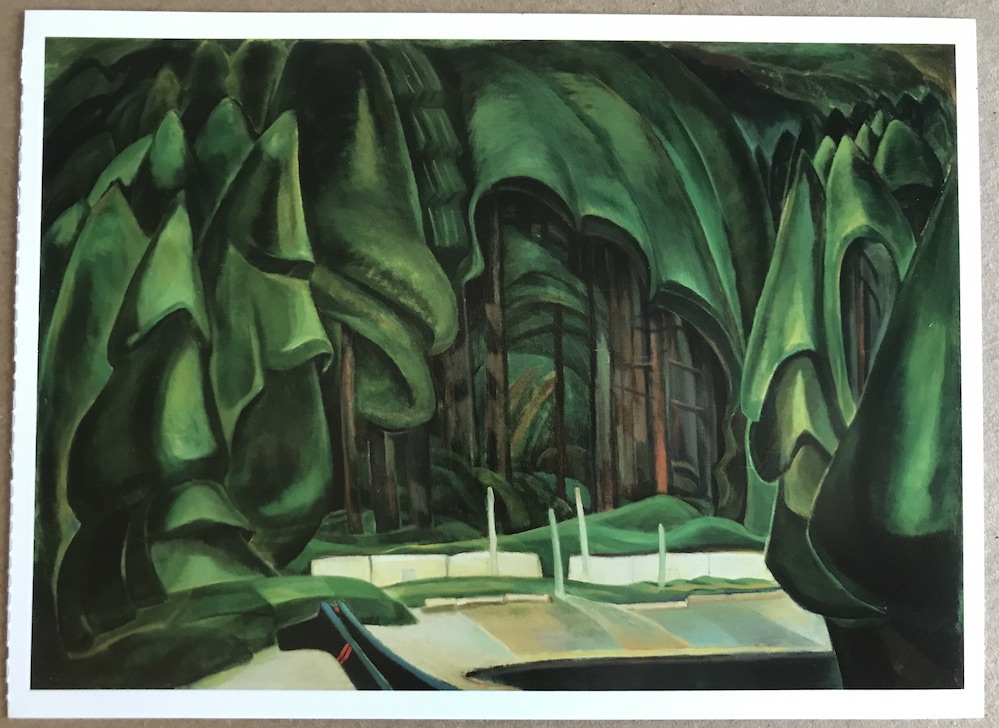
I’m sending art postcards, and just prepared to mail Old-Time Coast Village by Emily Carr, and… it’s just so GOOD! The way she shapes the forest, so the canopy looks solid, or like a blanket… it’s just WONDERFUL. Dark, mysterious, fresh, and wonderful.
The Vancouver Art Gallery’s website is down, so I’ll link to it (expecting it to return?), but also share a thumbnail of the card:
Postcard of Old-Time Coast Village by Emily Carr. Hopefully the Vancouver Art Gallery website will be restored, so you can look at their Emily Carr collection. I LOVE LOVE LOVE her work!
Vancouver Art Gallery – Emily Carr – Old Time Coast Village
The largest, most comprehensive website on the artist Emily Carr. Searchable database of artworks, biographical and contextual texts, and educational resources for teachers and students. Old Time Coast Village, oil on canvas, 1929 – 1930, Collection of the Vancouver Art Gallery, Emily Carr Trust
CAL FIRE’s L.A. Moran Reforestation Center is receiving cones from different seed zones and elevations. Seed zones are regions where plant material is found. Movement of plant material within these regions can be done with minimal risk of poor adaptation. pic.twitter.com/EJLqFIv84A
My favorite handmade photographic process has its own day of appreciation!
My friends at alternativephotography.com, my favorite alternative process website, have a gallery of submissions to share. It’s fun to see how people are using this vivid blue photographic printing process.
World cyanotype day – last Saturday in September
Once a year the cyanotype gets special attention. Since 2015 the cyanotype is celebrated on the last Saturday in September in the yearly event World cyanotype D
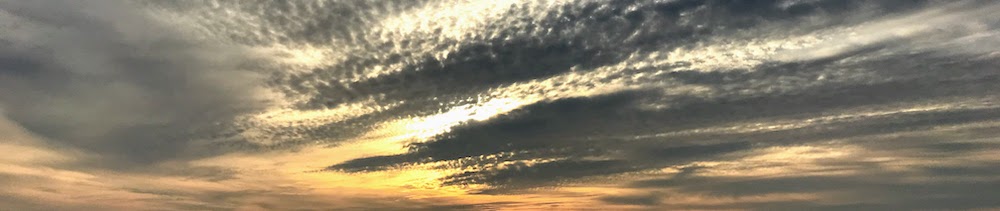
The sunrises remain a striking yellow-gold. This still has the capacity to surprise me. The wildfires are still sending particles to the upper atmosphere, and I am sad that I’m becoming used to the yellow tint to my surroundings. I don’t want to get used to it, but it is a daily filter. It is becoming normal.
~~~
I don’t write here about everything I read. I try to limit myself to books I strongly recommend. And the bulk of what I read each day aren’t books!
I read both US and international news each morning (not just the book reviews!), and I’m trying NOT to provide running commentary on that. (I’ve done that in the past on blogs, and it’s tiring. Also, you can get personal commentary on just about everything all the time on social media, along with an endless collection of reposts of things you’ve already read.) I don’t write about books until I finish them (notes for myself notwithstanding), which means I am always in arrears on endorsements.
On Twitter, which can consume an entire afternoon if I’m not careful, I read posts by my favorite authors, journalists, comedians, artists, and activists. There is a beneficial crossover of articles and other media on topics that interest me, recommended by people with similar interests, and written about by professional sources. It allows me to have a positive experience of Twitter, which wouldn’t be possible if I didn’t filter carefully.
That makes it sound like I only do super-professional research on Twitter, which is not the case. Twitter is also full of jokes, puns, highly charged commentary, mockery, illustrations, photos, AI software being used to match celebrity outfits to natural phenomena, and dumb-but-funny observations. I have geeky sense of humor, so I wind up with a lot of this sort of thing (below, sung to the tune of “That’s Amore“)
This is posted to Twitter from other sites by multiple posters, so I’m unsure who to credit. Twitter only lets me see a few days’ worth of these posts on the “That’s a Moray” topic, which appears to have a longer history than you actually want to know about. If you searched now, today, you’d see this and other variations of this coming up, including more song lines… Be warned: you’ll find yourself singing this in the shower.
This continues in many flavors, and is also enjoyed by the professional media (though non-media types shared the links with me in the first place):
🎶 When an eel climbs a ramp to eat squid from a clamp, that’s a moray
When an eel wants a squid that’s on land — god forbid! — that’s a moray
If the squid is too flat, there’s no problem with that, that’s a moray 🎶https://t.co/h77J9n9SAH
I have watched this. Many times. Possibly too many times.
It’s fun to be excited about this.
Also, I just love to see San Francisco in films. (This was really filmed here, in part: there were many excited sightings of filming downtown, and some pretty funny warnings from the public health service letting us know what the helicopters downtown were for. 🙂 )
Here I’m going to admit that when I’m not reading books, I am often… reading ABOUT books.
Setting aside my more-than-full-time job, artistic practices, Internet research rabbit holes, language study, long walks, and correspondence, there are still sometimes hours left in the day (especially if I don’t sleep) to read about books! 😀 You just have to look, and the time is THERE. (Give up television: it doesn’t lead to enough good books!)
I wind up reading about books even if I don’t plan to.
Even people I follow on Twitter are either already published authors, or they become published authors after I start following them. (Can I take credit for this somehow?) (I’ll be reviewing more of their books on this site, so I don’t have to list those now.)
Periodicals: The newspapers I subscribe to review books frequently and enthusiastically, and I often make note of their recommendations.
City Lights: City Lights is a landmark local bookshop AND a publisher, especially known for poetry.
Chronicle Books: Chronicle Books is a local publisher, and their emphasis keeps shifting, so I’m unsure what their specialty is now. They published a favorite technical alternative photographic process book, and a great how-to on fabric design patterns. They currently seem big into cookbooks and lifestyle/decor.
Specialty Publishers: as an artist and art book collector, I have many favorite publishers, including museums (though publishing is a sideline for them). Dedicated photo/art book publishers often have great websites and blogs (and some have their own bookshops!), which I visit just to see what they are up to, and invariably find something that fits my interests. This short list is organized based on the number of books by each I possess:
Phaidon: Based in the UK and NYC, has a bookshop in New York City, and the only time I don’t leave that shop with a bag full of books is when I’d pre-ordered their most tempting new publications. (I’m ridiculous.). I like them for fine art and art theory. There’s a special series of artist monographs that they do in a great style, and I have dreams of being featured by them someday…
Aperture: Based in New York City. Aperture is a non-profit, which publishes a great magazine and produces beautiful photography books.
Taschen: Based in Köln (Cologne), Germany. I like Taschen for their architecture compilations.
Gingko Press is based in Berkeley, California. Gingko produces books on art and design – their graphic design books in particular are especially attractive.
Be cautious: you’ll feel money trying to fly out of your bank account just by glancing at any of these sites!